The material question
When someone asks what our products are made of, the honest answer is: it depends.
Not because we’re indecisive. Because every product has different needs, and the material you choose shapes everything — how the part feels, how it holds up, how it snaps together, even how it looks in different light.
We use two main materials: PLA and PETG. They’re both excellent. They’re also very different.
PLA: The plant-based option
PLA stands for Polylactic Acid. It’s derived from renewable resources — usually corn starch or sugarcane. If you’re imagining a laboratory, it’s simpler than that: fermented plant sugars, processed into pellets, extruded into filament.
What we love about PLA:
- Sustainability story. It’s plant-based and biodegradable under industrial composting conditions. Not perfect, but better than petroleum-based plastics.
- Print quality. PLA is forgiving. It prints cleanly, holds detail well, and produces a smooth matte finish.
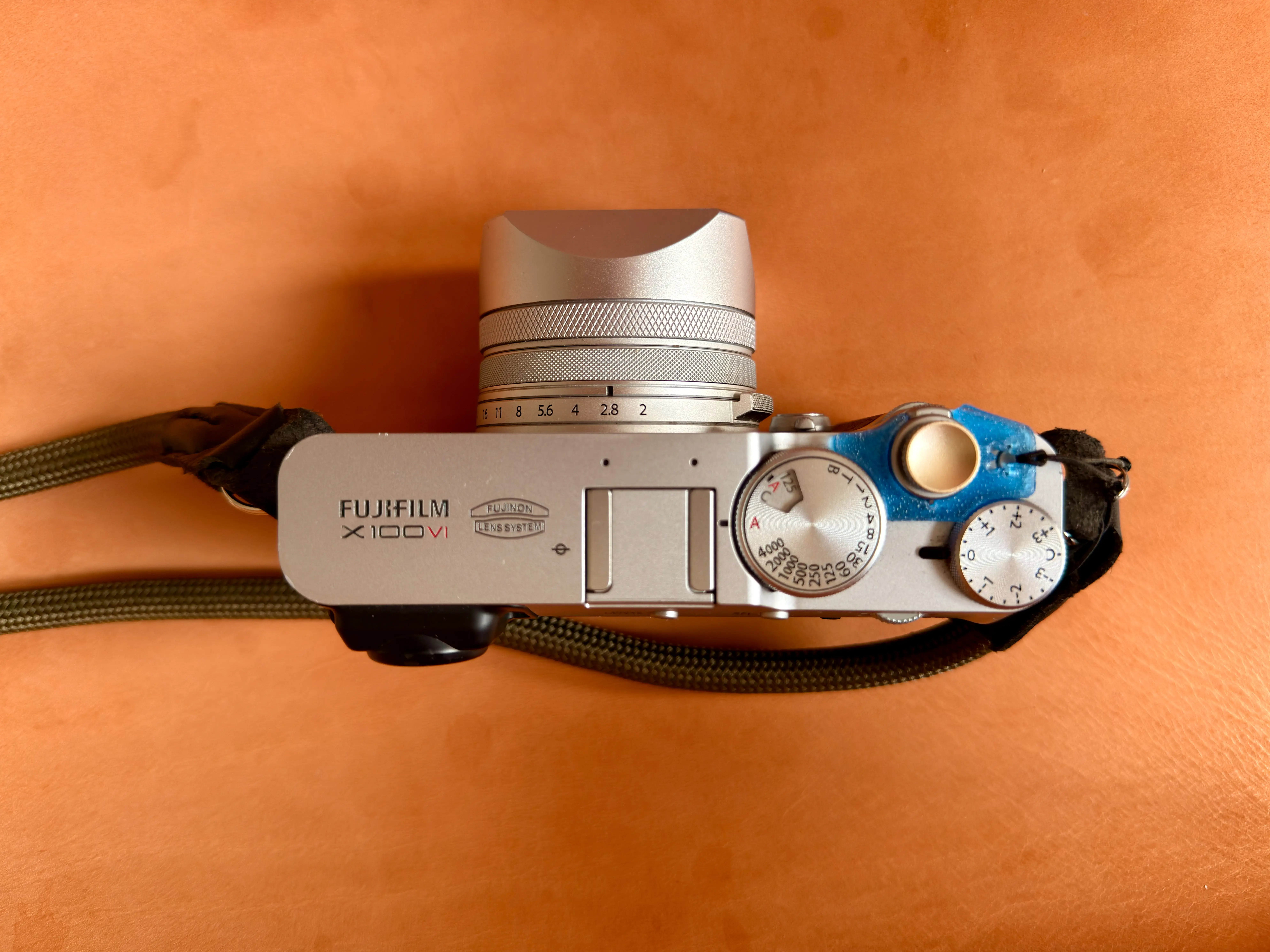
- Rigidity. For parts that need to stay stiff and precise — like the snap-fit mechanisms on our Power Switch Lock — PLA is excellent.
Where PLA struggles:
- Heat sensitivity. Leave a PLA part in a hot car, and it might soften or warp. The threshold is lower than you’d expect — around 50-60°C.
- Brittleness. PLA is stiff, but it can crack under impact or repeated stress. It doesn’t flex gracefully.
PETG: The tough one
PETG stands for Polyethylene Terephthalate Glycol. If that sounds like plastic bottle material, it is — PETG is related to PET, the stuff water bottles are made of. The glycol modification makes it easier to print.
What we love about PETG:
- Durability. PETG is tougher than PLA. It handles impacts, temperature swings, and repeated use without cracking.
- Slight flexibility. It bends before it breaks. For snap-fit parts that need to flex during installation, this is valuable.
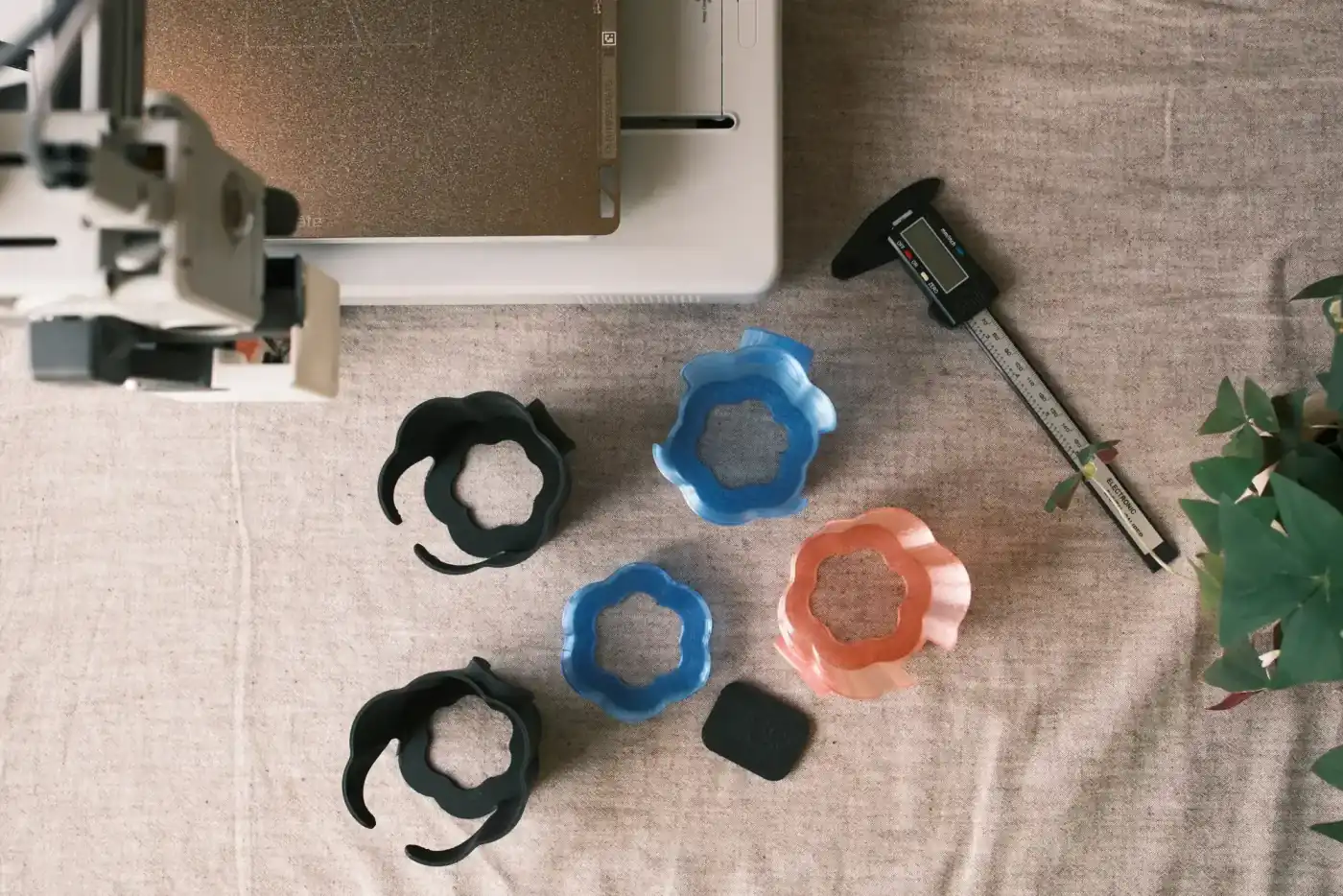
- Translucency options. PETG can be printed in beautiful translucent colors that glow in light. Our Flower Cup Holder in translucent pink? PETG.
- Recyclability. PETG is recyclable, and we often source recycled PETG filament when available.
Where PETG struggles:
- Print difficulty. PETG is pickier. It strings more, requires more precise temperature control, and can be harder to get crisp details.
- Surface finish. It tends toward a slightly glossier, sometimes less refined surface than PLA.
How we decide
The choice isn’t arbitrary. We match material to use case.
For camera accessories (Power Switch Lock, Focus Ring)
For outdoor products (Flower Cup Holder)
When we use recycled filament
- It's available in the color we need
- Print quality meets our standards (some recycled batches have consistency issues)
- Material properties match the product requirements
The sustainability nuance
We’re often asked: is 3D printing sustainable?
The honest answer is: more so than you might expect, but it’s complicated.
The good:
- Made to order. We don’t produce stock that might never sell. Every piece is printed because someone ordered it.
- Near-zero waste. Unlike subtractive manufacturing (cutting material away), additive manufacturing only uses what’s needed. Our scrap rate is minimal.
- Plant-based options. PLA is renewable and biodegradable. It’s not petroleum-based.
- Recycled materials. PETG can be recycled, and we source recycled versions when possible.
- Local production. Everything is made in Stockholm. No ocean freight from distant factories.
The real:
- Energy use. 3D printers use electricity. Our printer runs on Swedish grid power (largely renewable), but printing isn’t zero-energy.
- Not all recycled. Some colors and finishes require virgin material. We’re honest about this.
- End of life. PLA is “biodegradable,” but only under industrial composting conditions. It won’t break down in your backyard compost. PETG is recyclable but needs proper sorting.
We’re not claiming to save the planet. We’re trying to make thoughtful choices: produce only what’s needed, use better materials when we can, keep production local, and be honest about the trade-offs.
Why this matters for you
When you order from us, you’re getting:
- A part printed specifically for you, not pulled from warehouse stock
- Material chosen to match what the product actually needs
- Recycled material when it makes sense
- Honesty about what we’re using and why
The visible layer lines on our products aren’t a flaw — they’re evidence that this piece was made deliberately, locally, and recently. We think that’s worth something.
Material questions?
The ongoing experiment
Material science keeps evolving. New recycled filaments appear. Better plant-based options emerge. Print profiles improve.
We keep testing. When something better comes along, we switch. The products you order today might use a different filament blend than the ones we shipped last year — not because we’re inconsistent, but because we found something that performs better or aligns better with our values.
That’s the advantage of small-scale, in-house production. We can improve without waiting for a factory to change tooling.
The material choice matters. We think about it constantly. And now you know what goes into that thinking.